
Indian authorities have requested additional information from the United States based on the interrogation of Tahawwur Rana, an accused in the 2008 Mumbai terror attacks. The request was made through the Mutual Legal Assistance Treaty (MLAT).
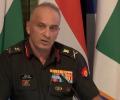
The Pakistan Army has accused India of attempting to manipulate history by creating fabricated narratives, following claims by the Indian Army regarding Pakistani casualties along the Line of Control.

In the aftermath of the Pahalgam terror attack, which claimed 26 lives and injured many, the government ordered all Pakistani nationals to leave the country and revoked their visas.
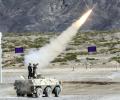
The Chinese military Thursday declined to comment on the performance of China-made weapons used by Pakistan in the recent conflict with India.
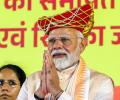
"In Pahalgam, terrorists not only shed the blood of Indians, but also attacked our culture. They tried to divide our society and the biggest thing is that the terrorists have challenged the women power of India," Modi said.
'Right now, we have no relationship with Pakistan. And the relationship with China is not great.'

'The lesson Beijing would have learned is that there is, cost-benefit wise, no better option than to keep the Pakistan military supplied with its most advanced armaments, certain that in hostilities with India these would be used for maximum effect.'

A 32-year-old Delhi resident was allegedly duped of over Rs 9 lakh by a person posing as the chief of the Anti-Terrorism Squad (ATS) and accusing him of being involved in the Pulwama terror attack.

India has to fill in all the critical gaps in missiles, ammunition, sensors and stockpile in the fastest possible manner, focusing on the critical instruments that worked this time, asserts Shekhar Gupta.

Police intensified the crackdown on the terror ecosystem in Kashmir, carrying out raids at more than 300 locations linked to persons affiliated with the banned Jamaat-e-Islami (JeI) in the valley.

India's Air Chief Marshal A P Singh met Prime Minister Narendra Modi on Sunday to discuss the security situation arising from escalating tensions with Pakistan. The meeting comes after a similar briefing by the Navy Chief on the situation in the Arabian Sea. This follows a deadly terror attack in Pahalgam, which India has blamed on Pakistan. India has taken several retaliatory measures, including suspending the Indus Waters Treaty and banning imports from Pakistan.

Pakistan-based terror groups Jaish-e-Mohammed (JeM) and Hizbul Mujahideen (HM) have begun relocating their bases to Khyber Pakhtunkhwa (KPK) province from Pakistan-Occupied Kashmir in the wake of India's Operation Sindoor, sources said.
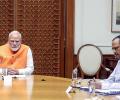
India's National Security Advisor Ajit Doval briefed US Secretary of State Marco Rubio on the country's missile strikes against nine terrorist targets in Pakistan. The strikes, dubbed "Operation Sindoor," targeted terrorist infrastructure in Pakistan and Pakistan-occupied Jammu and Kashmir. India stated that the strikes were measured, responsible, and non-escalatory in nature, targeting only known terror camps. The strikes followed a deadly attack on civilians in Jammu and Kashmir on April 22, for which India has accused Pakistan-based terrorists. The Indian government has cited credible leads, technical inputs, and survivor testimony as evidence of Pakistan's involvement in the attack.

India had vehemently opposed Asian Development Bank's decision to grant $800 million loan to Pakistan saying the fund could be misused for increasing expenditure on its military, government sources said.

India has warned Pakistan against its unprovoked firings along the Line of Control (LoC) in Jammu and Kashmir as the directors general of military operations of the two armies spoke on the hotline amid the escalating tensions over the Pahalgam terror attack.

US President Donald Trump claimed to have resolved the conflict between India and Pakistan, stating that 'seven brand new' planes were shot down during the conflict. He reiterated that he used trade as leverage to achieve this resolution.
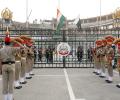
Pakistan's Foreign Office spokesperson Shafqat Ali Khan said on Friday that the ceasefire with India was holding and the country is committed to it. He also said that Pakistan is committed to making the ceasefire hold and de-escalation succeed, and then engagement to lead to stability and resolution of issues. Khan said that the two militaries have a channel of communication through the Directors General of Military Operations, through which they are working for de-escalation, in terms of the movement of troops. He added that Pakistan remains committed to the ceasefire announced on May 10 and lately, both sides have taken steps for de-escalation and return of stability.

The Pakistan Army has vowed to respond to Indian air strikes that targeted locations in Pakistan-occupied Kashmir and Punjab. The strikes were carried out from within Indian airspace, according to the army spokesman, who said that Pakistan will respond at a time and place of its choosing. The army is currently assessing the damage caused by the strikes.
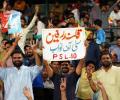
The remainder of PSL is set to be conducted without Hawkeye and DRS technologies as most of the technicians who handle that aspect are from India and are not expected to return.
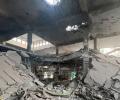
The Pakistan Army has criticized recent remarks by Indian military officers and political leaders, warning that a future conflict between the two countries could lead to "cataclysmic devastation." The statement follows comments from Indian officials regarding India's ability to cross borders and the potential for military action against Pakistan.
'Surgical strikes or air strikes, or both, are likely on the table.'
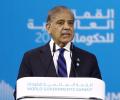
Prime Minister Shehbaz Sharif thanked US President Donald Trump for acknowledging Pakistan's role in counter-terrorism efforts after the country arrested a wanted terrorist. Trump thanked the Pakistani government for helping arrest "Mohammad Shareefullah", also known as Jafar, who supported and conducted activities on behalf of ISIS-K in support of multiple lethal attacks, including the Abbey Gate attack in 2021. Sharif said the terrorist, an Afghan national, had been apprehended in an operation along the border with Afghanistan.
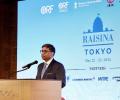
India's Foreign Secretary Vikram Misri has underscored the importance of not equating the victims and perpetrators of terror attacks, highlighting the need for global unity in combating terrorism. Speaking at Raisina Tokyo 2025, Misri expressed appreciation for Japan's support following the recent terror attack in Pahalgam, India. He also cautioned against the trend of some Western countries hyphenating India and Pakistan in the context of their recent military confrontation. Misri further outlined India's economic aspirations and its commitment to becoming a factor of stability in a turbulent world.

Intelligence agencies investigating the November 10 Delhi terror attack involving a suicide car blast have uncovered fresh details pointing to a wider transnational terror network, a structured chain of handlers, and preparations for multiple coordinated attacks, official sources told ANI.

Former Pakistani Foreign Minister Bilawal Bhutto has acknowledged the country's tango with terror operatives, saying that Pakistan has a past.

India has opposed the International Monetary Fund's (IMF) proposal to extend fresh loans of USD 2.3 billion to Pakistan, citing concerns that the funds could be misused for financing state-sponsored cross-border terrorism. India abstained from voting at the IMF meeting, expressing concerns about Pakistan's track record and the possibility of debt financing being misused for terrorism. The IMF took note of India's statements and its abstention from the vote. India's opposition comes at a time when military conflict between India and Pakistan has intensified following a terrorist attack in Kashmir.
A woman doctor arrested in connection with an inter-state terror module was part of Jamaat-ul-Mominaat, an organization launched by Jaish-e-Mohammed, officials said.

In a significant shift, Kashmiris from villages once considered strongholds of militancy have joined the condemnation of the recent massacre of 26 people in Pahalgam, raising slogans against terrorism and expressing solidarity with the victims. This unprecedented display of public sentiment across the valley marks a possible turning point in the region's fight against violence.

Two more persons have been apprehended in Assam for "sympathising with Pakistan, taking the total number of arrests to 58 so far in the wake of the Pahalgam terror attack, Chief Minister Himanta Biswa Sarma said.

'...without massive amounts of force.'

National Security Advisor Ajit Doval on Monday emphasised the need to counter terrorism in all its forms for overall regional peace and stability during a meeting with Chinese Foreign Minister Wang Yi in Beijing.
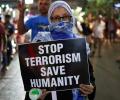
Pakistan has offered to join any neutral and transparent probe into the Pahalgam terrorist attack that killed 26 people. Prime Minister Shehbaz Sharif also warned India against any attempt to stop, reduce or divert the flow of water belonging to Pakistan, saying any such action would be responded to with full force and might. Sharif said Pakistan has always condemned terrorism in all its forms and manifestations and has endured immense loss of over 90,000 casualties and economic losses exceeding USD 600 billion. He also reiterated Pakistan's support for the right of self-determination of the Kashmiri people.

The National Investigation Agency (NIA) on Saturday conducted a massive search operation at 15 locations in eight states across the country in a Pakistan-linked espionage case.

'He decides who will be Pakistan's prime minister, president, even provincial chief ministers.'

Attacking the Congress, Union Minister Kiren Rijiju said that India has "paid a heavy price" for the sins committed by the Congress while Union Minister Pralhad Joshi has accused the Oppostion party of "mishandling" the situation after the 2011 terror attacks in Mumbai in under foreign pressure.

President Droupadi Murmu will take a sortie in a Rafale fighter jet in Ambala, Haryana.
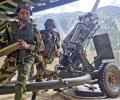
'Will this near-war, India's strongest military response so far, buy India another seven years of deterrence?' asks Shekhar Gupta.
India told the UN Security Council that it calls for a pragmatic engagement with the Taliban, underlining that a focus on only punitive measures will ensure a 'business as usual' approach.
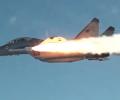
The Directors General of Military Operations of India and Pakistan firmed up the arrangement on stopping military actions on May 10 after four days of fierce offensives between the two sides that triggered fears of a wider conflict.
'There is no independently verified imagery or battlefield evidence to support Pakistan's claim.'
